Flip the Bottle Over: A Skeptic's Five-Step Tour of Any Supplement Label

Photo: Unknown, CC BY 4.0, via Wikimedia Commons
Most of us shop for supplements the way we shop for cereal: front of the box, bright colors, one big promise. The back gets about four seconds of our attention, usually in the checkout line.
That is backwards, and it is not really your fault. The front panel is marketing copy. The Supplement Facts panel is where a manufacturer has to commit to numbers. Learning to read it takes less than ten minutes and answers most of the questions a fast-talking salesperson hopes you will not ask.
Here is the five-step scan I run before anything goes in my cart — or on my shelf as a distributor.
Step 1: Serving size, the number everyone skips
Look at the top of the panel. How many capsules, scoops, or gummies count as one serving? Then look at the total count on the front.
A bottle of 60 capsules with a two-capsule serving is a 30-day supply, not 60. A powder that suggests two scoops is twice as expensive per day as the price tag suggests. If you know you will never take three capsules at a time, you are effectively comparing a different product than the one on the label.
Quick math: price divided by number of servings. That is your real cost per day, and it is the only fair way to compare two bottles.
Step 2: Ingredient amounts, and what a blend hides
Vitamins and minerals usually list a milligram amount per serving. Botanicals and specialty blends are trickier. When you see a single number followed by a list of five ingredients in parentheses, that is a proprietary blend: the total is disclosed, the individual amounts are not.
That is not automatically a scandal. It does mean you cannot evaluate whether any single ingredient is present at a meaningful amount, and you cannot compare it to another product. If the blend is the reason you are buying, ask the company for per-ingredient amounts. A good one will answer.
Worth remembering: in the US, dietary supplements are not reviewed by the FDA for safety and effectiveness before they are sold. The label is largely the manufacturer's own statement.
Step 3: Percent Daily Values, including the blanks
The %DV column is based on a 2,000-calorie reference diet. It is a rough yardstick, not a prescription, and it changes with age, sex, and life stage.
Two habits help here. First, notice the blanks. Plenty of botanicals have no established Daily Value, so an empty column is not a red flag — it just means there is no reference number. Second, notice the enormous numbers. A B-vitamin at 1,000% DV may be fine for some people and unnecessary for others. Compare against the tolerable upper intake level, and talk to a clinician if you take medication or have a condition.
Step 4: Below the line — other ingredients and added sugar
The fine print under the panel is where gummies and chewables get interesting. Check the added sugars line. A gummy that delivers your vitamins along with several grams of sugar per serving is a candy with a supplement habit, and three servings a day adds up.
Other ingredients are listed in descending order by weight — fillers, binders, flavors, colors. You do not need to memorize them. You do need to notice when the list is longer than the active ingredients, or when an allergen shows up you were not expecting.
Step 5: Seals, testing, and the boring details
Third-party seals are not all equal, but they are a useful signal. NSF Certified for Sport and USP Verified both involve outside testing of identity, potency, and contaminants. Informed Choice and Informed Sport focus on banned substances for athletes. A seal is not a guarantee of benefit, only of a certain kind of diligence.
Then check the small stuff: a best-by date, a lot number, a company address that is not just a PO box, and a customer service line a human actually answers. Also look for the standard disclaimer that the product is not intended to diagnose, treat, cure, or prevent any disease. It should be there, and its presence is normal.
The ten-minute checklist
- Serving size and servings per container
- Cost per day, not cost per bottle
- Whether individual amounts are disclosed
- %DV, and the blanks
- Added sugar and the other-ingredients list
- Third-party seal, lot number, and a phone number
What the label cannot tell you
A panel will not tell you whether you need the product. That answer lives in your labs, your diet, your medications, and a conversation with someone qualified to read all three. The label is a filter for the market, not a diagnosis.
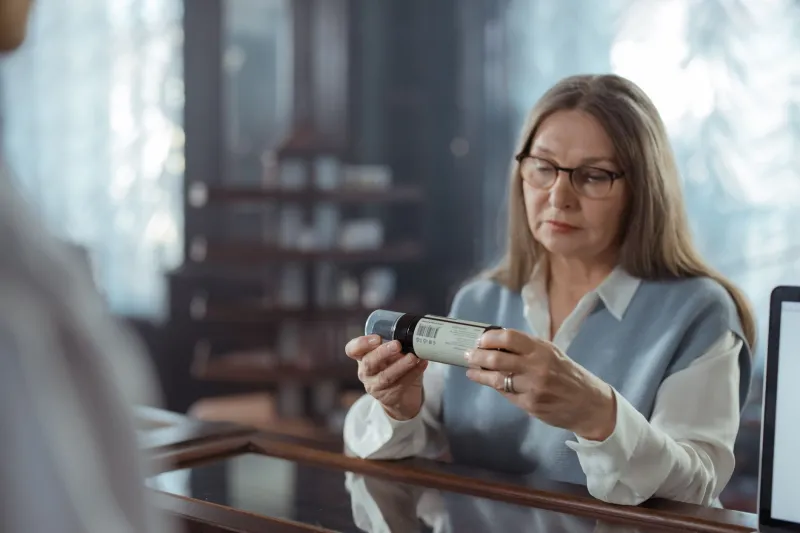
If you sell wellness products, this is a nice habit to model out loud. Hand the bottle to a curious customer, turn it over, and walk them through the back. It takes ten minutes, it is more persuasive than any pitch, and it makes you the kind of distributor people trust with a second question.